Business Logic Analysis of Odoo 19 Sales Module
In the digital age, the automation and refined management of sales processes have become important means for enterprises to enhance their competitiveness. Odoo 19, as a highly integrated enterprise management system, not only achieves a full-chain closed loop from leads to payments through its sales module, but also establishes a flexible and efficient sales system for enterprises through its rich system architecture and collaboration with multiple business modules. This article will conduct an in-depth analysis of the Odoo 19 sales module by combining business process diagrams and system architecture diagrams, helping us understand its core logic and data-driven capabilities.
I. Viewing the Business Execution Loop from the Sales Process
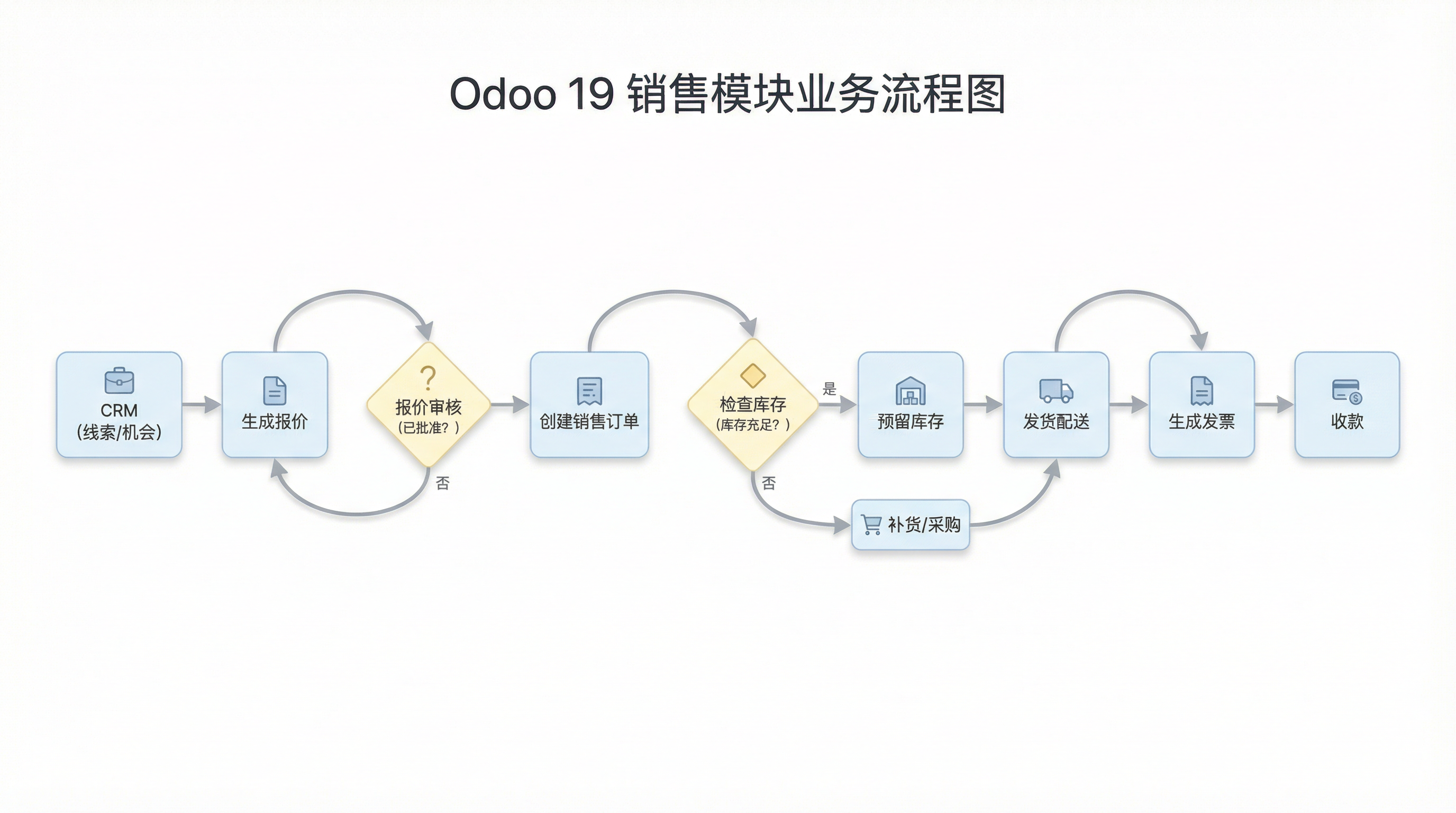
According to the first "Odoo 19 Sales Module Business Process Flowchart," it can be seen that the entire process follows a typical order fulfillment chain, but with intelligent judgment and system linkage between the steps:
-
CRM Lead Management
The sales logic starts with CRM. After marketing or business personnel obtain leads, they convert them into opportunities, laying the foundation for subsequent quotations and negotiations. -
Generate Quote and Review Mechanism
After generating a quote, the system enters the Quote Review branch:- Not passed → Return to quotation stage for adjustment
- Passed → Automatically proceed to create Sales Order (SO)
-
Inventory Check and Replenishment Linkage
After creating a sales order, the system will automatically check whether inventory is sufficient:- Sufficient inventory → Enter reserved location
- Insufficient inventory → triggers replenishment procurement process (supply chain linkage)
-
Shipping, Delivery, and Invoice Reconciliation
After inventory is reserved, the sales order enters the shipping and delivery process, followed by invoice generation, and then flows to the financial system for accounts receivable processing. -
Final Payment Closure
After payment is completed, the order is truly closed from a business perspective, with the entire process being traceable and auditable.
Overall, the Odoo sales module is not an isolated tool; rather, it serves as a sales-driven execution core that automatically links with the CRM, inventory, procurement, and financial modules, preventing the disconnect between sales commitments and inventory reality, thereby significantly reducing operational risks.
2. Multi-module Collaboration Capabilities from a System Architecture Perspective
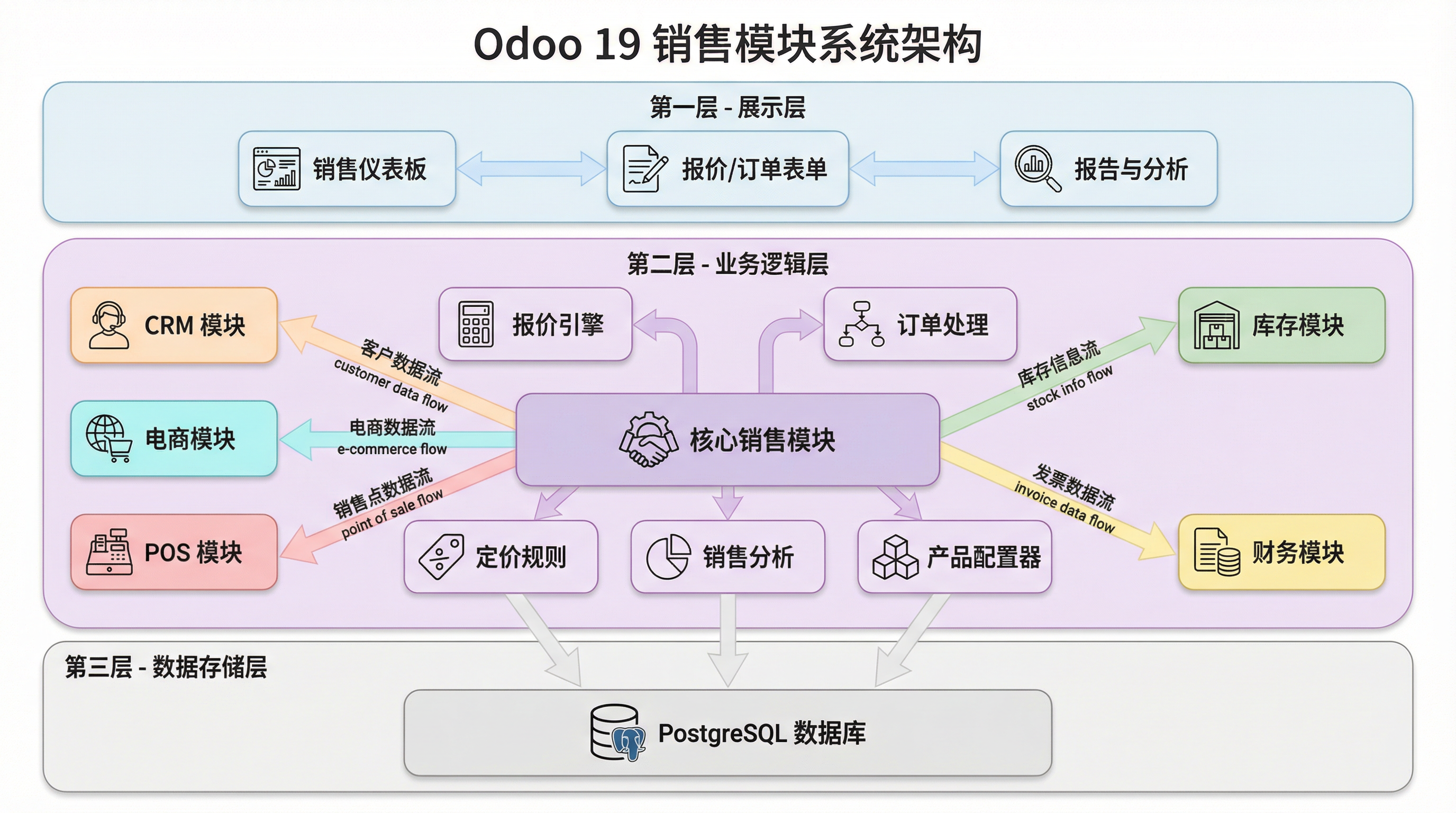
The second diagram, "Odoo 19 Sales Module System Architecture," clearly illustrates the strategic position of the sales module within the Odoo system: it serves as the central hub connecting multiple business modules and the database layer.
The architecture is developed in three layers:
Layer 1: Presentation Layer (For Business Personnel)
- Quotation/Order Form
- Sales Dashboard
- Reports and Analysis
This layer focuses on the human-system interaction interface, providing visual operations and insight support.
Layer 2: Business Logic Layer (System Brain)
The core sales module is located in the center, processing business rules and data connectivity through the logic engine, including:
- Quotation Engine
- Order Processing
- Pricing Rules
- Product Configuration
- Sales Analysis
Simultaneously performing bidirectional data flow interaction with peripheral modules:
| Collaboration Module | Data interaction content |
|---|---|
| CRM module | Customer data flow |
| E-commerce module | E-commerce data flow |
| POS Module | Point of Sale Data Stream |
| Inventory Module | Inventory information flow |
| Financial Module | Invoice data flow |
This means the sales department no longer relies on "manual communication" or "Excel summaries"; instead, the system automatically exchanges data, reducing human errors and improving collaboration efficiency.
Layer 3: Data Storage Layer
The entire system's data is ultimately aggregated and stored in the PostgreSQL database, ensuring data consistency, security, and traceability, laying the foundation for future BI analysis and data mining.
3. Bridging the Gap: From Process Execution to Digital Intelligence Operations
Combining the two images, we can see:
- The business process diagram shows the step-by-step progression of sales actions, achieving result orientation
- System architecture diagram illustrating how the Odoo sales module ensures smooth execution of the above processes through system capabilities
The combination of the two brings three important values:
① Business-driven systems, not systems restricting business
Odoo's processes follow common business logic while allowing flexible configuration, such as multi-level quotation approval, dynamic pricing strategies, etc.
② System-linked operation, rather than single-point management
Sales is no longer just sales, but an operational hub that runs through the supply chain, finance, procurement, and inventory.
③ Data accumulates to form assets, rather than being "lost after use" in business
The entire process is recorded, indicators are analyzable, and a basis for growth decisions can be formed.
IV. Summary
Odoo 19's sales module is not just a set of sales order tools, but a core hub connecting customer value, internal operations, and capital recovery. It ensures closed-loop business execution through process logic, cross-module collaboration through system architecture, and helps managers gain insights into trends and optimize strategies through data accumulation.
For enterprises undergoing digital transformation or dealing with chaotic sales systems, building a sales system based on Odoo will not only improve efficiency but also change business operations, achieving true data-driven growth.
