【I. Frontiers and Challenges: Management Concerns Under the Spotlight 】
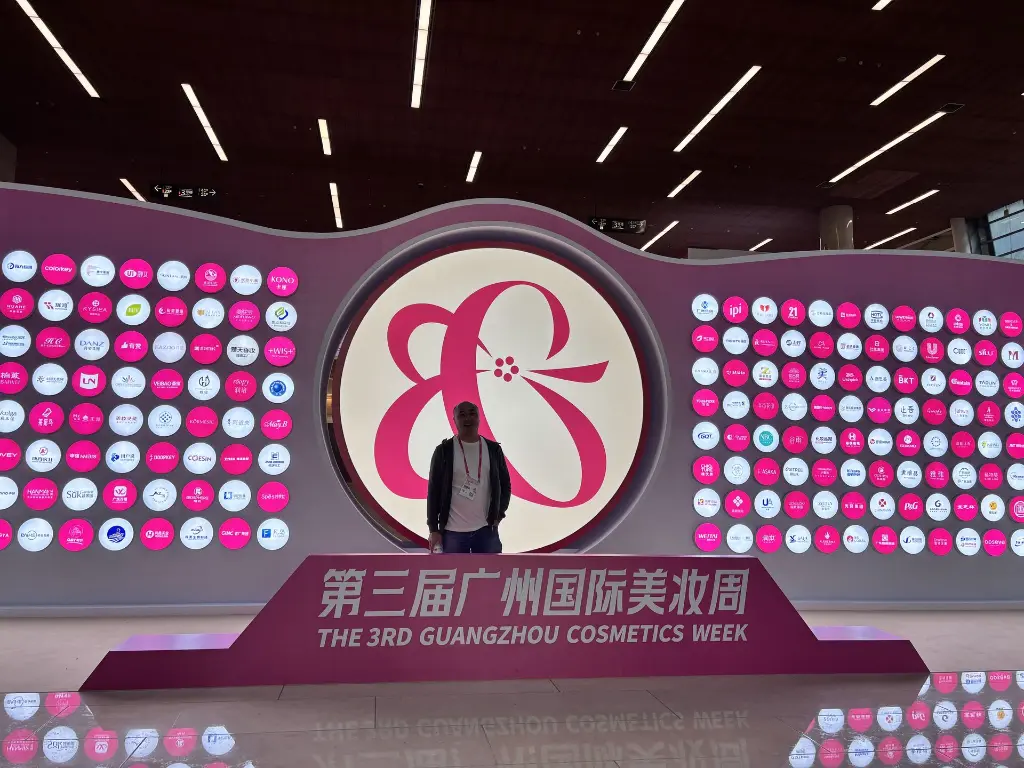
At the 3rd Guangzhou International Beauty Week (Guangzhou Baiyun International Convention Center), we witnessed the Chinese beauty industry's ultimate pursuit of efficacy and technology. From rigorous sharing on the PDRN receptor mechanism to the concentrated display of various innovative active ingredients, the entire industry is advancing toward higher and more refined directions. This marks that the beauty industry has fully entered the era of "ingredient enthusiasts" and "efficacy is king".

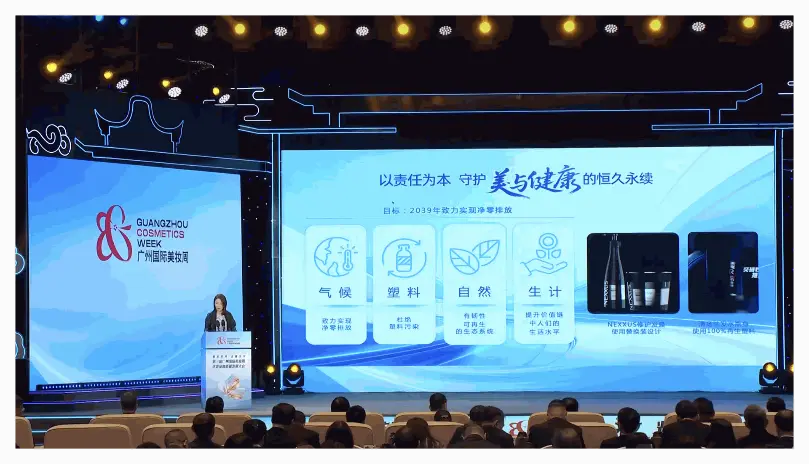
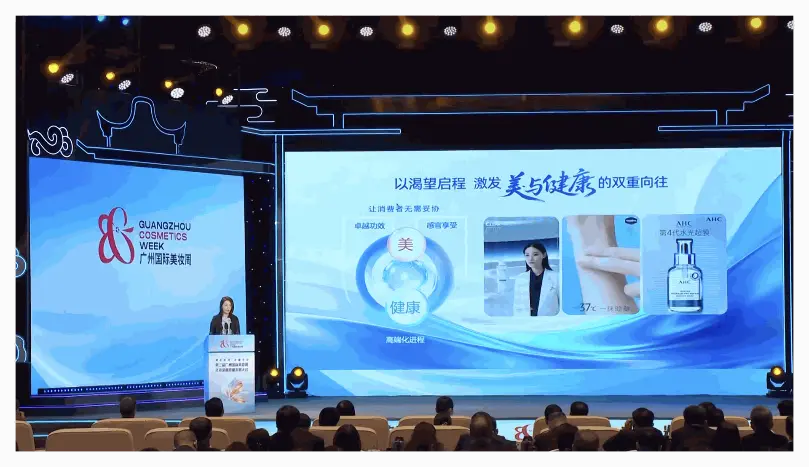
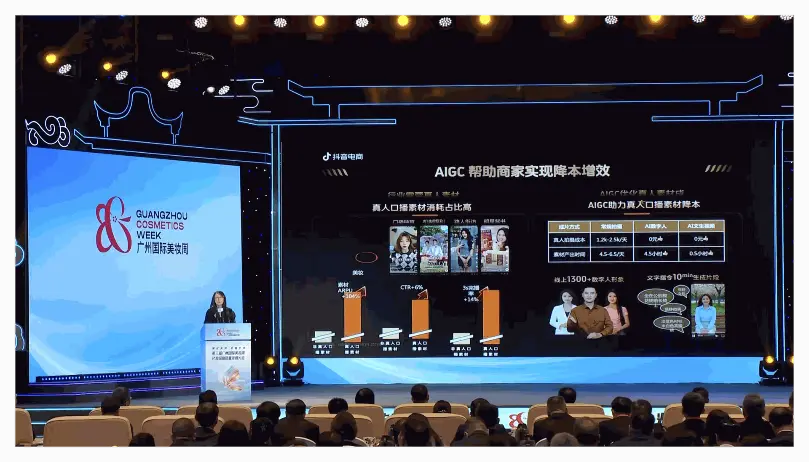
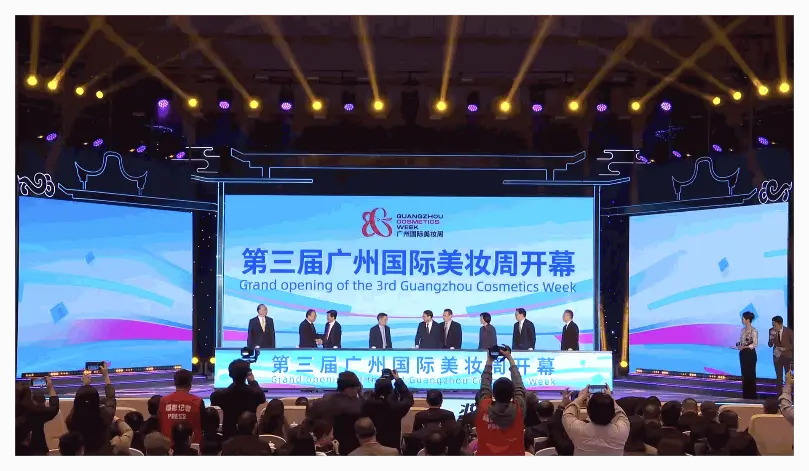
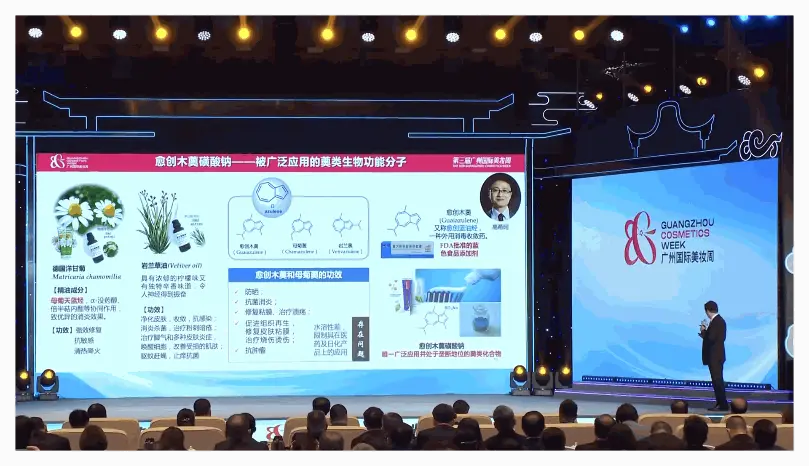
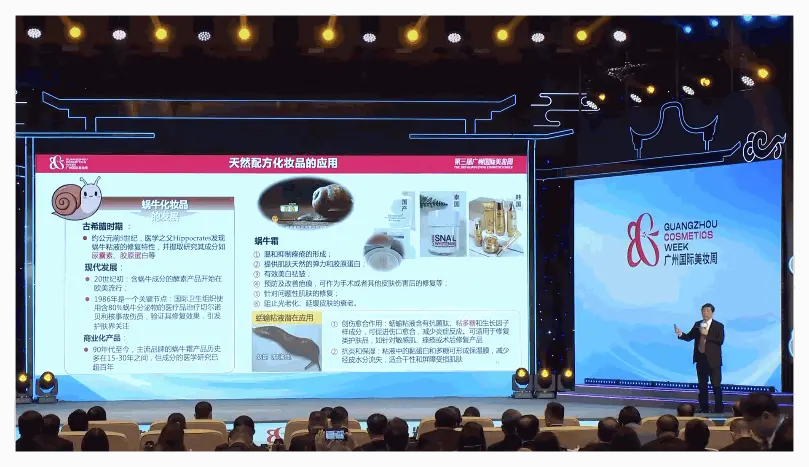
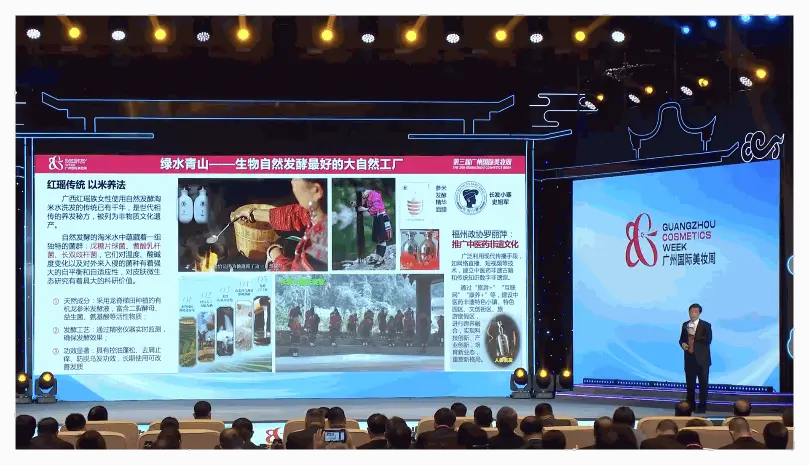
However, the glamour under the spotlight often masks the many challenges of the admin backend.
The rapid advancement of technological R&D is widening the “digital divide” between the R&D side and the management side at an unprecedented pace. The birth of a new formula means changes to hundreds of raw material batches, dozens of suppliers, and hundreds of compliance data points. For beauty companies lacking deeply customized ERP, this rapid iteration brings not efficiency, but risk.
We often hear the following questions raised by industry partners:
- R&D side: When the active ingredient is fine-tuned by 0.01% in the laboratory, can the production side and regulatory filing information be updated synchronously to avoid compliance risks?
- Production side: How can zero error be ensured when feeding high-value raw materials? How can the risk of discrepancies between manual weighing records and actual feeding data be eliminated?
- Supply chain side: As uncertainty in market forecasts increases, how can we avoid excessive stockpiling of high-priced raw materials or production stoppages due to material shortages?
Guangzhou Zhongdi Information Technology Co., Ltd. understands that only a strong “digital foundation” can bear the weight of cutting-edge technology. Our ERP solution does not pursue flashy features; we focus solely on solving the core pain points of beauty companies in production, compliance, and supply chain, using data to build a lean, compliant, and efficient operating system.
【II. Directly Addressing Pain Points and Scenario Analysis: The Risk of Losing Control in Complex Business 】
In deep collaboration with hundreds of beauty companies, Zhongdi Technology has summarized three business scenarios most likely to cause management loss of control:
1. Scenario One: The “Avalanche” Effect Triggered by a Formula Change
- Risk: In traditional mode, the transfer from the R&D formula (Master Formula) to the production BOM (Bill of Materials) is often manual or via Excel spreadsheets. Once the R&D department modifies the ratio of a core raw material in the system, such changes are difficult to synchronize in real time to production work orders and the NMPA filing system. This may result in: incorrect production feeding, costing errors, and even triggering regulatory penalties.
- Core pain point: R&D data lacks authority and uniqueness, forming data silos.
2. Scenario 2: The “black box” problem of weighing and feeding high-value raw materials
- Risk: Many active ingredients in cosmetics are expensive, and their added amounts are precise down to the milligram level. If relying solely on manual records, there is a risk of human negligence, inaccurate weighing, and even misappropriation and fraud. Especially under multi-variety, small-batch production models, chaos on the production floor and opaque data are the main sources of quality incidents and cost waste.
- Core pain point: The production process lacks real-time monitoring and error-prevention mechanisms.
3. Scenario Three: "Internal Friction" and "External Threats" under Group Operations
- Risk: The group may have R&D companies, production factories, and multiple sales brands. Internal transactions (for example, an R&D company charging formula fees to a factory) and external transactions (importing raw materials or exporting products) coexist. If there is no integrated management platform, the following will occur: complex multi-company settlement, inadequate control of exchange rate fluctuation risks, and unclear group fund flows.
- Core pain point: Lack of integrated business-finance penetration capability, and high group management and control costs.
【III. Zhongdi Solution: The Hardcore Practice of Three Core Technology Engines 】
In response to the above challenges, the Zhongdi ERP solution is not a simple stacking of modules, but rather has built three core technology engines based on industry characteristics:
1. R&D/Compliance Engine: Authoritative R&D Data and Intelligent Flow
(1) LIMS-level formula management:
Zhongdi ERP provides LIMS (Laboratory Information Management System)-grade formula management functions. The system has built-in complex material attributes and regulatory restrictions; during the formula design stage, R&D personnel can have the system automatically verify ingredient safety and usage limits (such as prohibited and restricted substances specified by NMPA) in real time, bringing compliance forward into the R&D process.
(2) Change Control and Data Flow:
Once the formula is confirmed, the system will generate a "gold standard" formula with a unique timestamp and automatically push it through a strict change control process to the production BOM, process routes, and NMPA filing interface. This completely eliminates the risks caused by manual synchronization, ensuring the authority of **"once R&D data is determined, data across the entire process is automatically synchronized."**
2. Lean Manufacturing Engine: IoT-Driven Error-Proofing on the Production Floor
(1) Intelligent error-proof weighing system:
This is one of the most differentiated features of Zhongdi ERP in the beauty industry. Through IoT technology, the system directly connects to electronic scales, barcode scanners, and PDA devices on the production floor. When operators collect raw materials, they must use a PDA to scan the material barcode and work order information for dual verification, and weigh precisely according to the weight range assigned by the system.
- Zero-error verification: If any weight deviation exceeds the preset tolerance range (e.g., ±0.5%), the system will immediately lock the electronic scale and trigger a mandatory alarm, preventing non-compliant feeding.
- Electronic Batch Record (EBR): All key process data such as weighing, feeding, and mixing are automatically collected by the system and generate tamper-proof electronic batch records, perfectly meeting quality traceability and audit requirements.
(2) Flexible production scheduling (APS):
In response to the beauty industry's popular needs for multiple varieties, small batches, and rapid line changeovers, our APS (Advanced Planning and Scheduling) module can optimize scheduling in real time based on multiple constraints such as capacity, materials, and personnel, effectively reducing changeover waiting time and improving equipment utilization.
3. Business-Finance Integration Engine: Group Control and Globalization Support
(1) Multi-organizational structure and multi-company settlement:
Our system supports complex multi-company, multi-organizational structures, and parallel management of multiple sets of accounts. The system can automate the processing of intra-group transactions such as sales, purchases, and transfers, and generate internal settlement vouchers. This greatly simplifies financial reconciliation and consolidated reporting, freeing finance personnel from tedious accounting work.
(2) Multi-currency and exchange rate risk management:
For raw material imports (such as the procurement of active ingredients) or product exports, the system has built-in powerful multi-currency accounting functions. It supports exchange rate management with real-time or scheduled updates, automatically calculates the functional currency cost of foreign currency transactions, and automatically calculates exchange gains and losses at period end, providing enterprises with precise cost analysis and exchange rate risk alerts.
(3) S&OP Collaborative Planning:
The system integrates the S&OP (Sales and Operations Planning) module, forcibly connecting sales forecasting, capacity planning, material procurement, and financial budgeting. This enables all departments to make decisions based on the same set of data, completely breaking down traditional departmental barriers.
【IV. Value Feedback: Performance Improvement Brought by Digitalization (approx. 150 characters)】
By implementing Zhongdi ERP solutions, cosmetics companies have achieved the following key value improvements:
- Compliance risk reduced by 99%: Ensure formulation and production compliance from the source, effectively addressing NMPA's strict regulation.
- Feeding accuracy improved to 99.99%: Eliminate manual weighing errors, save high-value raw materials, and reduce production losses.
- Supply chain response speed increased by 30%: Shortened the order-to-delivery cycle, enabling rapid market response.
- Group financial efficiency increased by 50%: Automated internal settlements, reducing manual reconciliation and report consolidation time.
【V. Conclusion: Becoming a Digital Craftsman in the Beauty Industry】
Behind the stage of Guangzhou International Beauty Week lies the desire of countless enterprises for lean management. Guangzhou Zhongdi Information Technology Co., Ltd. believes that excellent formulas require excellent management systems to support them. Through technical means, we leave complex management logic to the system and return simple, compliant, and efficient operations to users.
If you are facing management bottlenecks, or hope to bring the latest R&D achievements to market efficiently and compliantly, please feel free to contact us.Zhongdi Technology is committed to being your most reliable digital partner, working together to embrace a new chapter in Smart Manufacturing in the beauty industry!
Appendix: In-depth Analysis of Key Technical Terms in Zhongdi ERP (Internal/Release Reference)
This article is a supplementary explanation of the technical points mentioned in 'Observations from the Third Guangzhou International Beauty Week: When Ingredient Enthusiasts Encounter the Digital Divide, How Does Zhongdi ERP Achieve Lean Management and Compliance Breakthroughs in the Beauty Industry?'.
1. LIMS (Laboratory Information Management System) Level Management
- Full name: Laboratory Information Management System
- Manifestation in Zhongdi ERP: Although Zhongdi ERP is not a standalone LIMS, it integrates the core functions of LIMS in the formula R&D management module.
- Professional explanation: LIMS-level management ensures the authority, uniqueness, and rigor of R&D data. It not only records the ingredients and ratios of formulations, but also tracks raw materials'batch inspection results and stability data, and performs cross-comparison. This means all R&D activities are in a controlled state, providing the most reliable source data for subsequent production and quality traceability.
2. BOM (Bill of Materials)
- Chinese Name: Bill of Materials
- Manifestation in Zhongdi ERP: Automatic conversion and inheritance from “R&D BOM” to “Production BOM”.
- Professional explanation: A BOM details the list of all components, subcomponents, and raw materials required to manufacture a specific product. In the cosmetics industry, BOMs are very complex and may include base agents, auxiliary agents, trace active ingredients, packaging materials, etc. Zhongdi ERP ensures that the formula at the R&D stage (R&D BOM) can be automatically, accurately, and compliantly transformed into the (production BOM) required for actual material requisition and feeding on the production floor, which is the core hub for achieving integration of R&D and production.
3. APS(Advanced Planning and Scheduling)
- Chinese Name: Advanced Planning and Scheduling
- Manifestation in Zhongdi ERP: The core optimization tool of the production planning module.
- Professional explanation: APS is an advanced production management tool that goes beyond the rough scheduling of traditional ERP and can simultaneously consider multiple constraints, including equipment capacity, personnel skills, raw material inventory, changeover and cleaning time, delivery requirements, etc., generating an optimized production scheduling plan within seconds. This is crucial for the beauty industry's multi-variety, small-batch, rapid changeover production model, effectively improving equipment utilization and reducing changeover costs.
4. EBR (Electronic Batch Record)
- Chinese Name: Electronic Batch Record
- Manifestation in Zhongdi ERP: Quality management output of the production execution module (MES/WMS collaboration).
- Professional explanation: EBR refers to the digital, tamper-proof production records automatically or semi-automatically collected and generated by the system during the production process. It records in detail all key steps in the production process of each product batch, including weighing time, material input amount, temperature, pressure, operator signature, key verification results, etc. EBR is a modern tool that replaces traditional paper batch records and is an essential condition for achieving GMP/GAMP regulatory compliance and quality traceability and responding to audits.
5. IoT (Internet of Things) Technology Applications
- Chinese name: Internet of Things
- Embodiment in Zhongdi ERP: The technical foundation of the precision weighing system.
- Professional explanation: In Zhongdi's production management, IoT technology is used to connect physical equipment on the production floor (such as high-precision electronic scales, temperature sensors, and mixers) with the ERP/MES system in real time. Through this connection, ERP no longer relies on manual input but directly obtains accurate data from the equipment side, enabling real-time monitoring, remote control, and automatic data collection, ensuring the authenticity and timeliness of data.
6. NMPA (National Medical Products Administration)
- Chinese Name: National Medical Products Administration
- Embodiment in Zhongdi ERP: Regulatory compliance verification and filing data support.
- Professional explanation: NMPA is the highest regulatory authority for China's cosmetics industry. Zhongdi ERP has built in NMPA's latest regulations and lists of prohibited and restricted substances. During product R&D and production, the system verifies against these regulations in real time to ensure that all raw materials are used within compliant limits. In addition, the system can generate compliance data packages that meet NMPA requirements, greatly simplifying the filing process for new product registration or efficacy claims.
7. S&OP (Sales and Operations Planning)
- Chinese Name: Sales and Operations Planning
- Embodiment in Zhongdi ERP: A tool for cross-departmental collaborative decision-making.
- Professional explanation: S&OP is a cross-departmental, periodic decision-making process aimed at coordinating the balance between market demand (sales forecasts) and supply capability (production, procurement, inventory). The Zhongdi ERP platform mandatorily integrates data from sales, marketing, production, procurement, finance and other departments onto the same platform, and through unified reports and meeting processes, ensures that all departments base their plans for the next 3–18 months on the same version of the facts, avoiding inter-departmental "internal friction" and planning conflicts.
